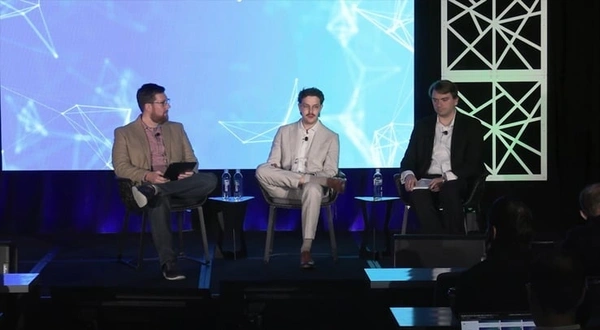
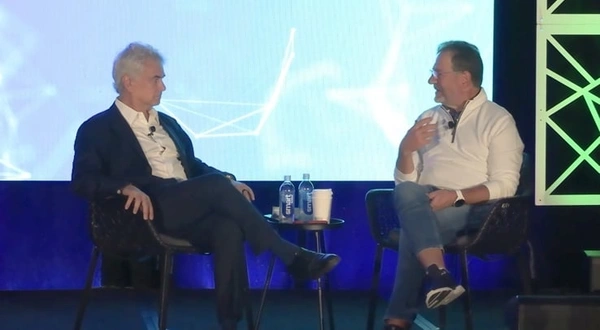
Alex Balkanski, President & CEO of Picarro, delivered an insightful and rousing opening keynote at the 2024 Spring Picarro Gas Community Conference. Driven by a mission to revolutionize gas distribution worldwide, Alex stresses the importance of learning from customers globally.
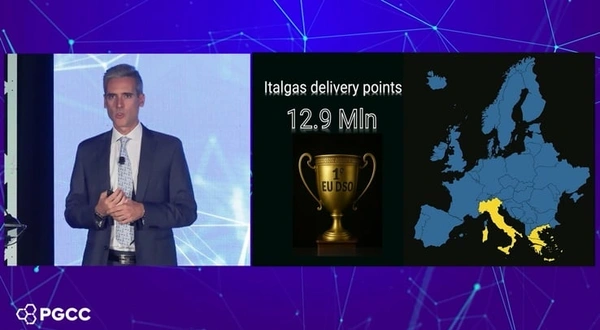
Alex introduces the need to re-evaluate current gas leak detection methods, with the call to adequately identify and prioritize leaks. The talk underscores the vital role data gathering and analytics have in reshaping natural gas distribution, identifying leaks’ distribution and the significance of targeting super emitters. Companies such as PG&E and Italgas, who have reduced emissions and oder calls, are highlighted as models to emulate.
In his conclusion, Alex encourages a transition towards a more integrated and data-driven approach in natural gas distribution, presenting the potential for cost savings, improved sustainability, safer infrastructure, and cleaner environments through the adoption of the advanced tools and analytics Picarro has to offer.
Key Takeaways:
- Importance of Feedback and Collaboration: Alex emphasizes the importance of attendee feedback and open collaboration, thereby fostering a rich environment for idea sharing and improvement.
- Acknowledgment of Effort: He recognizes Picarro’s team effort in organizing the conference and acknowledges the board of directors for their assistance in the company’s venture to reshape global gas distribution.
- Super Emitters: The concept of ‘super emitters’ is introduced, stressing the importance of targeting high-emitting leaks in the pursuit of better gas leak detection.
- Significance of Data Gathering and Analytics: The role of data gathering and analytics is highlighted as crucial in identifying and addressing gas leaks, aiming for net-zero emissions and reducing complaint calls.
- Best in Class: Noteworthy examples like PG&E and Italgas are cited as successful instances of significant emissions and oder call reductions.
- Emphasis on Integration of Data and Analytics: There is a strong emphasis on the integration of data and analytics for effective decision making and resource allocation.
- Optimism for Future of Natural Gas Distribution: Alex expresses optimism about the future of natural gas distribution, portraying a vision for safer and cleaner infrastructure through effective and targeted measures.
NOTES FROM THE OPENING KEYNOTE
Three key ideas:
“Emissions quantification is a game changer” [6:33]
Balkanski emphasized the need for a major transition in utilities from concentration measurement to emissions.
- Dated methodologies: Limitations of current methods for leak detection and introduced Picarro’s state-of-the-art approach of measuring emissions rather than concentrations to accurately detect and prioritize leaks.
- Concentration will tell us whether there is a leak or there is not. As long as we are close enough to the leak to detect it.
- Leak concentration decreases exponentially from its source, a foot away from the source its concentration is already down by a million
- As of today, fifty years later, you still miss most leaks, they are so inefficient that they look for leaks once every three years
- The merits of emissions: By focusing on only the leaks that matter, you can more easily respond to the changing needs of the industry, and bring value to your entire organization.
- The capacity of Picarro’s technology to distinguish leak sizes for more accurate leak profiling.
- Picarro can quantify leak flow rate at the speed of traffic
- Once-in-a-generation transition: Quantifying leaks is a game changer. Targe high-emitting leaks in the pursuit of better gas leak detection.
- Quantifying emissions is both the key challenge and opportunity for the gas industry.
- 5% of leaks are over 50% of emissions
- 20% of leaks are 85% of emissions
- 80% of leaks are of no interest
- Emissions are intricately tied to what operators care about – public safety, risk reduction, sustainability, Net Zero goals, operational efficiencies, and strategic CAPEX investments.
Survey frequency is key”[18:32]
- Frequency matters – we’ve shown you we have a way to do it, but to do it effectively
- It’s not “one and done”
- This is an exercise of regular data collection
- You can only act on what you measure.
- Significance of Data Gathering and Analytics: The role of data gathering and analytics is highlighted as crucial in identifying and addressing gas leaks, aiming for net-zero emissions and reducing complaint calls.
- Odor call reduction – the sooner you detect a high emitting leak the less likely it is to result in an odor call
- Emissions reduction – the sooner you detect a super-emitter the less it will emit
- Risk reduction – the sooner you detect a hazardous leak the sooner
“The Path to Net Zero” [26:43]
- Best in Class – Noteworthy examples like PG&E and Italgas are cited as successful instances of significant emissions and odor call reductions.
- Best in class companies are driving their infrastructure every year
- Either in hybrid mode – like PG&E
- Or fully prioritizing emissions – Italgas
- Moving forward
- PG&E is increasing its focus on emissions by lowering the emissions threshold for leaks targeted further de-emphasizing compliance survey – resource shift
- Italgas is moving to drive its infrastructure twice a year
The Future of Gas Distribution
- Emphasis on Integration of Data and Analytics: There is a strong emphasis on the integration of data and analytics for effective decision making and resource allocation.
- Optimism for Future of Natural Gas Distribution: Alex expresses optimism about the future of natural gas distribution, portraying a vision for safer and cleaner infrastructure through effective and targeted measures.
- Going forward: Advocacy for the integration of different aspects of gas distribution management based on data-driven decisions.Excitement for the journey ahead in revolutionizing gas distribution.
- Collaboration: Motivation to collaborate with the audience in this endeavor.
Companies Referenced:
Selected Links/Materials:
 English
 简体中文
简体中文
 Deutsch