G2308 Analyzer Datasheet
G2203 Analyzer Datasheet
GasScouter™ G4301 Analyzer Datasheet
Picarro Spotlight: Hidden Heat Beneath the Ice — Isotope Measurements Reveal Cause of Melting Glacier
Picarro Spotlight: Migratory Birds Reveal the Physics of Flight — Isotopes Show the Sweet Spot
Picarro Spotlight: Measuring Water Gains and Losses in Deer Mice
Blog: Beyond Leak Detection
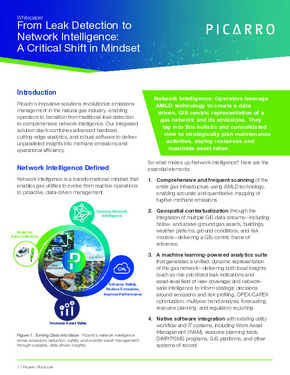
The natural gas industry is evolving—and fast. Traditional leak detection, while essential, is no longer enough to meet growing demands around emissions reduction, safety, and regulatory compliance.
The next step? Network Intelligence.
Blog: Why Integration Matters
In today’s utility landscape, new technologies are only as valuable as their ability to work with the tools you already use. That’s why Picarro’s emissions intelligence platform is built for integration.
From GIS to work order systems, PSMS to capital planning tools—Picarro connects the dots.
Built for CompatibilityThe Picarro system is natively designed to integrate with:
Blog: Why Network Intelligence Matters Now at a Global Scale
As governments and regulatory bodies worldwide tighten methane emissions standards, the energy industry faces a pivotal moment: compliance is no longer enough. With PHMSA’s forthcoming regulations in the U.S.
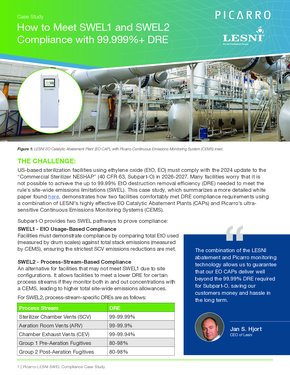
Navigating EtO Compliance Amid Regulatory Uncertainty
Blog: Introducing the Picarro EU Methane Regulation Compliance Playbook
The EU Methane Regulation is now in effect, bringing stringent new requirements for measuring, monitoring, reporting, and reducing methane emissions across gas distribution networks. With deadlines fast approaching, operators must act swiftly to develop a compliant Leak Detection and Repair (LDAR) program while ensuring operational efficiency.
Blog: Fall 2024 EMEA Picarro Gas Conference: A Hub for Innovation and Collaboration
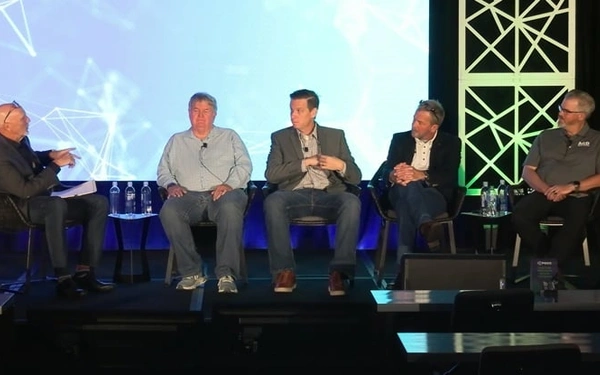
The Fall 2024 Picarro Gas Conference, held in Amsterdam this year, brought together 56 leaders from 31 companies across Europe for three days of insightful discussions, hands-on workshops, and future-focused presentations. The event provided a platform for natural gas operators to explore the latest advancements in methane emissions management and compliance with the new EU Methane Regulation.
Blog: Why We’re Excited About the Picarro Handheld – A Game Changer for Leak Detection
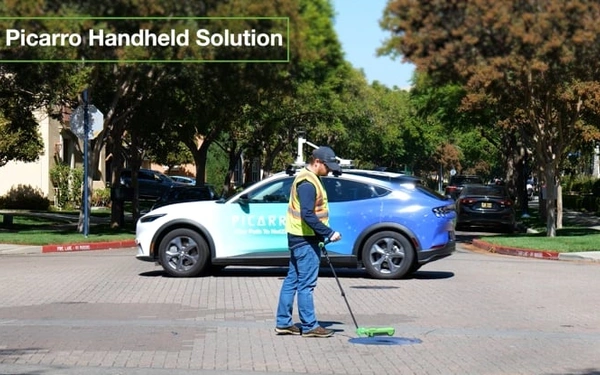
At Picarro, innovation is at the heart of everything we do, and today, we’re thrilled to introduce something we believe will truly transform the way natural gas operators work—the Picarro Handheld. This new device isn’t just another tool in the toolkit; it’s the next step in revolutionizing leak detection and management, and we couldn’t be more excited to share it with the world.
Why This Handheld Matters
Blog: Modernizing Leak Management: The Power of Picarro's LISA™ Priority Scoring System
Thinking outside of the box is a critical mechanism for any innovative product; however, understanding the capabilities and foundation of why the box exists in the first place is crucial.
Blog: An Update on Emerging Global Methane Regulations
Addressing methane emissions is critical in combating climate change, alongside efforts to reduce carbon dioxide (CO2) emissions.
PS-19 Test Results Show Picarro CRDS Far Outperforms OE-FTIR
The US EPA recently finalized the updates to 40 CFR 63, Subpart O (otherwise known as the Commercial Sterilizer National Emission Standards for Hazardous Air Pollutants/NESHAP). The updated rule came into effect through the Risk and Technology Review (RTR) and aims to address Ethylene Oxide (EtO, EO) emissions from point sources and room air emissions.
Blog: Vehicle Selection Guide
This article will serve as a guide to selecting a suitable vehicle for use in Picarro AMLD drive survey usage.
Blog: Transforming Leak Detection and Repair, A Deep Dive into PHMSA’s Proposed Amendments
Welcome to an exploration of the future of pipeline safety and environmental standards. We're diving headfirst into the game-changing proposals put forward by the Pipeline and Hazardous Materials Safety Administration (PHMSA).
Blog: Picarro’s Innovative Solution for Detecting and Measuring Fugitive Methane Emissions
Natural gas distribution system operators (DSO) around the world must detect and measure methane emissions to find and eliminate hazardous leaks, meet financial budgets and shareholder expectations, and address environmental, social, and governance (ESG) goals.
Mitigation can only happen once DSOs understand their emissions. It can be very challenging to account for fugitive emissions in a distribution network which may contain millions of pipe segments and other assets representing potential point emitters.
Blog: Emissions Measurement - Top Down or Bottom-Up?
Methods of Estimating Network-Wide Gas Leak Flow Rates - Which is Best for Your Utility?
The key to understanding and tackling the methane emissions problem is to identify, measure, quantify, and reduce the methane emissions from your business activities. Knowing the total emissions volume of your organization is a critical step toward meaningfully reducing emissions and taking credit for those reductions.
Blog: Methane Emissions Abatement and Super Emitters
In our recent podcast on methane abatement, part of our expert series, which features the perspectives of industry leaders on the challenges and advancements in gas and energy sectors, Picarro’s Francois Rongere, Senior Director Solution Architect, Climate and Safety, and Sean MacMullin, Senior Director of Software and Data Analytics, discuss the relationship between methane detection, quantification, and abatement programs, aiming to illuminate the future of methane emission management.
Blog: Methane Leak Technology & Methane Measurement
In our recent podcast, we tackled the critical issue of methane data collection, leak detection and emissions measurement - uncovering the current state of the industry and its potential future directions. Our guest experts, Picarro’s Francois Rongere, Senior Director Solution Architect, Climate and Safety, and Sean MacMullin, Senior Director of Software and Data Analytics, shared their perspectives and offered unique insights into this evolving industry.
Blog: Gas Utilities Seek Digital Solutions to Reduce Methane Emissions and Ensure Public Safety
Jonathan Bent, Ph.D., Senior Application Scientist, Environmental
Measurement Location:
ORDEQ Near-road Site
Tualatin, OR
45.3992°, -122.7458°
At Picarro, we love when customers share their innovative integrations and applications of our analyzers in the field. This customer success story is highlighting Assistant Professor, Dr. Yuzhong Zhang of Westlake University, China. With the help of Beijing Cen-Sun Technology Development Co., our partners in China, Dr. Zhang recently set up a G2201-i within his car to obtain on-board GHG measurements. We are grateful to Dr. Zhang and Cen-Sun’s efforts for bringing us this wonderful story. Enjoy!
The year was 2008. The second wave of therapeutic biological products was just around the corner. By now it was known that many of these products were susceptible to oxidative damage by residual hydrogen peroxide left over after aeration of the aseptic processing equipment and barrier system. How sensitive these products were to low concentrations of residual hydrogen peroxide was difficult to assess because there were no obvious measurement systems capable of quickly, accurately and precisely measuring vapor phase hydrogen peroxide below a few hundred parts per billion (
The Picarro Small Sample Introduction Module (SSIM) is designed for processing small volumes of gas samples through a Picarro analyzer. Through a minor modification, we can now expand the functionality of the SSIM so that more accurate concentration measurements can be performed on both isotopic and concentration analyzers.
Stable Isotope Analysis of High-Saline Water
Using Stable Isotopes of Water for Water Use Efficiency in Agriculture
Blog: The Future of Natural Gas Leak Detection
The future of natural gas leak detection is the subject of two recent publications.
CABAUW, NETHERLANDS — While carbon dioxide (CO2) currently contributes to two-thirds of anthropogenic radiative forcing, the effects from other greenhouse gases (GHGs), such as methane and nitrous oxide, remain largely uncharacterized and could significantly impact the future of global climate change. In order to address uncertainties in emissions, the Integrated non-CO2 Greenhouse gas Observing System (InGOS) project is focused on improving and extending the European observation capacity for non-CO2 GHGs.
Ricardo Sánchez-Murillo of the National University of Costa Rica foresees water challenges affecting even the wettest regions of the globe, such as Central America. Applying his experience gained from the University of Idaho-Moscow, he’s intent on finding solutions by studying Costa Rica’s little understood water systems.
BOULDER, CO — According to their website, the Global Monitoring Division of the National Oceanic and Atmospheric Administration’s Earth System Research Laboratory (NOAA/ESRL/GMD) “conducts sustained observations and research related to source and sink strengths, trends, and global distributions of atmospheric constituents that are capable of forcing change in the climate of Earth through modification of the atmospheric radiative environment, those that may cause depletion of the global ozone layer, and those that affect baseline air quality."
Few scientific meetings match the level of organization and attendee engagement as does this Global Monitoring Annual Conference (GMAC). This past May, GMD celebrated its 40th year of these meetings in Boulder, CO. One thing many people may not know about this year’s meeting is that it was funded entirely by private donations, which were primarily from individuals. In the following article, Picarro’s greenhouse gas product manager, Gloria Jacobson, checks in with GMD director, Jim Butler, after the event.
Blog: Picarro Surveyor™ for Natural Gas: Rapid, Accurate Leak Detection for Improved Safety; PG&E - First Utility to Deploy Technology
In January, Picarro introduced a first-of-its-kind solution for natural gas pipeline leak detection and measurement, based on our new series of methane isotope analyzers. The new solution, called the Picarro Surveyor™ for Natural Gas Leaks, measures methane plumes in the air, maps them, and then immediately alerts users and repair teams upon leak detection in real-time while traveling at normal driving speeds.
I've got two simple yet evocative phrases for you. Wing pods. Unmanned Aerial Vehicles. Excited? We are. During late June, a team of top scientists from the NASA Ames Research Center deployed three Picarro analyzers as part of the The Railroad Valley Vicarious Calibration Campaign, a collaboration between the Japan Aerospace Exploration Agency (JAXA), and NASA's Jet Propulsion Laboratory (JPL), Pasadena, Calif. One of the analyzers was deployed in a wing pod of an Alpha jet which flew up to altitudes of 25,000 feet. Another was deployed in the nose cone of an Unmanned Aerial Vehicle
The greenhouse gas carbon dioxide (CO2) is a product of human activities that use carbon-based fuels, such as home heating, cars, and manufacturing plants, to name a few. But CO2 also has many natural sources, such as soil, volcanoes and all living things that breathe. So a necessary question that should be asked by climate and citizen scientists alike is, “How do you know increases in CO2 are from human activity?”
We blogged previously about carbon sequestration and its a topic we watch closely. You may have read that earlier this week Saskatchewan approved plans for a commercial-scale carbon capture and sequestration (CCS) project.
FORUM Gas Wasser Wärme: EU-Methan-Verordnung
Das FORUM Gas Wasser Wärme hat in seiner ersten Ausgabe 2025 einen spannenden Fachartikel zur Einführung der fahrzeuggestützten Methode zur Abbildung von Methanemissionen auf dem Gasverteilnetz veröffentlicht. Der Artikel geht auf die konkreten Vorgaben der EU-Methan-Verordnung ein und erläutert im Anschluss, mit welchen Methoden und Lösungen Branchenakteure die Einhaltung der entsprechenden Vorgaben erreichen können.
Compliance Playbook for the EU Methane Regulation
The EU Methane Regulation is now in effect and contains numerous provisions for the precise measurement, quantification, monitoring, reporting, and verification of methane emissions, as well as for emission reduction through LDAR (Leak Detection and Repair) activities, repair obligations, and restrictions on venting and flaring.
With LDAR program submissions due in May 2025 and first emissions reports required by February 2026, now is the time to implement a comprehensive, data-driven compliance strategy.
Picarro: Solutions for the Natural Gas Market
We provide natural gas operators around the globe with the most effective and proven path to net zero methane emissions, and actionable data through direct methane measurements.
Picarro Solution Overview Brochure 2022
This brochure offer a quick glance into Picarro's four primary use cases and how they may impact your operations.
Solution Brief // Picarro Analytics
Picarro offers a comprehensive suite of analytics tools to provide visibility into your natural gas infrastructure at a degree of accuracy not possible.
AN042: Nitrous Oxide Isotopic Measurements of Discrete Gas Samples Using Sage Gas Autosampler and Picarro PI5131-i Analyzer
AN041 - Field Deployment of Picarro G2508 and Eosense eosAC/eosMX in Perennially or Periodically Flooded Soils
Flood-irrigated agricultural soils can be a significant source of the greenhouse gases (GHG) carbon dioxide (CO2), methane (CH4), and nitrous oxide (N2O) (Linquist et al. 2011, Oertel et al. 2016). As these ecosystems are typically characterized by high spatial and temporal heterogeneity, continuous trace gas measurements are needed to better detect patterns and quantify net ecosystem fluxes.
Eosense Application Note 0019
This application note outlines the configuration and use of the Picarro G2201-i dual carbon (CO2 & CH4) isotope analyzer to differentiate between C3 and C4 respiration sources at a transitional agricultural experiment in southern Sweden.