 English
 简体中文
简体中文
 Deutsch


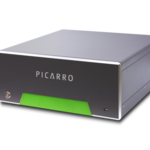
G2301 Gas Concentration Analyzer
CONTACT US
The Picarro G2301 gas concentration analyzer provides simultaneous, precise measurement of carbon dioxide (CO2), methane (CH4) at parts-per-billion (ppb) and water (H2O) vapor at parts-per-million (ppm) sensitivity with negligible drift for atmospheric science, air…
G2210-i Isotope Analyzer
CONTACT US
The Picarro G2210-i isotope analyzer is designed to address the scientific community’s need for real-time methane emissions source attribution. High-precision atmospheric methane and ethane measurement capabilities, combined with carbon dioxide and water vapor measurements, provide the…
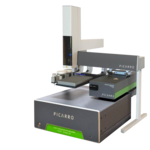
L2130-i Isotope and Gas Concentration Analyzer
CONTACT US
The Picarro L2130-i isotope analyzer provides high quality measurements of water stable isotopes for demanding applications such as paleoclimatology, hydrology, and oceanography. δ18O and δ2H high-precision measurements can be made with water samples from…
Semiconductor Partners
Please choose your country or region from the list below to contact one of our authorized semiconductor service centers. If your country or region is not listed, please open a ticket directly with our corporate headquarters.
The Power of Stable Isotopes: Nature’s Barcode
If you hear anyone from Picarro talking about radical insights into the global carbon, water and nitrogen cycles – “essentially the building blocks of all life on Earth” – we are referring to the information that our CRDS technology provides about the molecules that comprise these cycles - notably, their stable isotope…
G2508 Gas Concentration Analyzer
CONTACT US
The Picarro G2508 gas concentration analyzer provides simultaneous, precise measurement of nitrous oxide (N2O), methane (CH4), carbon dioxide (CO2), ammonia (NH3) at parts-per-billion (ppb), and water (H2O) vapor at parts-per-million (ppm)…
A Field-Deployable, High Accuracy Atmospheric Multi-Gas Monitor Based on Cavity Ring-Down Spectroscopy
Picarro has developed a field-deployable, real time, ambient gas monitor capable of measuring atmospheric levels of carbon dioxide, methane, hydrogen sulfide, and ammonia with parts-per-billion (ppbv) sensitivity and water vapor with parts-per-million (ppmv) sensitivity. Results from field trials of three different CO2 analyzers at Harvard, Penn State, and the NOAA facility in Boulder CO…
High-Precision Measurements of CO2, CH4 and H2O for Atmospheric Inversion and Eddy Covariance Flux Based on Cavity Ring Down Spectroscopy
Description of field-deployable instrumentation that measures carbon dioxide, methane, and water vapor with both high-accuracy and high-precision would reduce the uncertainty in the determination of terrestrial sources and sinks of these dominant greenhouse gases.
Measuring Stable Isotopes of Water in Both Gas and Liquid Phase Using a Single Field-Deployable Analyzer
Results presented from field trials at Woods Hole Oceanographic Institute and laboratory tests at INSTAAR of a newly available analyzer capable of performing continuous measurements of stable isotopes (δD and δ18O) of liquid water and / or water vapor samples.
Continuous Isotopic CO2 Measurements by Wavelength-Scanned Cavity Ring Down Spectroscopy: Studies of Exchange Processes in Terrestrial Ecosystems
Picarro has developed an isotope analyzer for lab and field measurements of carbon isotopes in CO2 with the goal of allowing turnkey analysis to be done without the need for flask samples and complex IRMS methods. Here we present a description of the analyzer and its technology as well as recent results from two different collaborators who utilized the analyzer.
Continuous Greenhouse Gas and Isotopic Carbon Dioxide Measurements via WS-CRDS Analyzers: Investigations in Real-Time Monitoring at CO2 Geological Storage Sites
Describing work by CSIRO, CO2 CRC and Picarro to characterize sequestration site leaks using tracers and isotopes.
Simultaneous Carbon Dioxide and Methane Eddy-Covariance Flux Measurements Using a High-Speed WS-CRDS Analyzer: Field Comparisons to Conventional AmeriFlux Systems
Describes the first field data taken by Oregon State University of Picarro's dual-species Eddy-Covariance analyzer.
Wavelength-Scanned Cavity Ring Down Spectroscopy: Opening New Doors for Tracing Water Isotopes in the Hydrosphere, Biosphere, and Atmosphere.
Describes work by INSTAAR, NOAA & Picarro on both liquid water and water vapor measurements of stable water isotopes.
Bulk Stable Isotope Analysis of Carbon from Solids and Liquids using a Total Organic Carbon Analyzer Coupled to a Wavelength-Scanned Cavity Ring-Down Spectrophotometer
From the EGU 2009 General Assembly, describing measurements of edible oils and chocolates made with Picarro's iTOC-CRDS Isotopic Carbon Analyzer.
Enabling Continuous, Field-Based Isotope and Greenhouse Gas Measurements with WS-CRDS-based Analyzers
Describes specific design aspects of WS-CRDS-based analyzers and how these details result in ultra-stable field measurements.
Isotope Measurements Transformed Real-time, In-situ Point-of-origin Tracing with δ18O and δD in Water and δ13C in Complex Molecules.
Describes how CRDS works and shows hydrogen, oxygen and carbon isotope data for water vapor, evapotranspiration, food and agricultural applications.
Capturing small-scale variations of water isotopes in ambient air and natural waters of California: Results of field measurements using Wavelength Scanned Cavity Ring-Down Spectroscopy.
Describes liquid water and water vapor isotope measurements with the Picarro isotopic water analyzer.
Field tests of a new WS-CRDS based, closed-path analyzer for simultaneous eddy covariance flux measurements of CO2 and methane.
Describes field testing of Picarro's fast analyzer for eddy covariance flux measurements of greenhouse gases.
Vertical Profiles of Greenhouse Gas Concentrations via Airborne Measurements.
Describes results of laboratory testing and field campaigns with Picarro's flight-ready greenhouse gas analyzer.
A Mid-IR, Wavelength-Scanned, Cavity Ring-Down Spectrometer for Continuous Trace N2O and Nitrogen Isotope Measurements
Describes results from a Picarro N2O analyzer based in the mid-infrared spectral region.
An Acetylene Tracer-Based Approach to Quantifying Methane Emissions from Distributed Sources Using Cavity Ring-Down Spectroscopy
Describes a newly-developed analyzer for tracer-based measurements and shows results from field work using such a system.
Compound Specific Isotope Analysis of Carbon using Cavity Ring-Down Spectrometry
Describes recent developments in GC-C-CRDS-based instrumentation applied to isotope measurements in large molecules.
Demonstration of High-Throughput Water Isotopologue Measurements Using Cavity Ring-Down Spectroscopy
Describes the flexibility of Picarro's fast water isotope analyzer for applications requiring very short sample-to-sample measurement times and shows data taken in lab and field measurements.
A Mid-IR, Cavity Ring-Down Spectrometer for Continuous Trace N2O and Nitrogen Isotope Measurements
Describes recent developments in CRDS instrumentation in the mid-infrared spectral region for applications using N2O isotopologue and trace concentration measurements.
Capturing small-scale variations of water isotopes in ambient air and natural waters of California: Results of field measurements using Cavity Ring-Down Spectroscopy
Describes field work conducted with Picarro water isotope analyzer for both water vapor and liquid water samples.
Continuous Flow—Cavity Ring-Down Spectroscopy: A Powerful Tool for Food Origin Analysis and Adulteration Detection
Describes use and methods for stable isotope-based food adulteration testing using Cavity Ring-Down Spectrometry.
LIAISON™: Fully-Automated Universal Interface for Bulk 13C High-Precision Isotope Analysis using Cavity Ring-Down Spectroscopy
Describes application and function of a the LIAISON, a new Picarro universal interface for high throughput analysis.
Real-Time Field-Based Water Vapor Isotope Measurements with a CRDS Analyzer: Probing Cropland Evapotranspiration
While stable isotope techniques have been previously applied to partition evapotranspiration (ET) fluxes in crops, it has only recently become possible to take in situ, long-term, continuous (every 10 seconds) measurements of stable water vapor isotopologues. A Picarro water vapor isotope analyzer (L1115-i) based on cavity ringdown spectroscopy (CRDS) was recently…
Hi-Resolution Observations of Stable Oxygen and Hydrogen Isotopes of Water and Water Vapor in California
The regulation of Earth’s climate and its ability to sustain life are critically linked to water as it exists in all three of its phases (gas, liquid, and solid). Earth’s water cycle, its movement between the hydrosphere, biosphere, and the atmosphere, and how it undergoes phase changes, is incredibly complex. While we continue to gain insight into the water cycle, there remains…
An Acetylene Tracer-Based Approach to Quantifying Methane Emissions from Distributed Sources Using Cavity Ring-Down Spectroscopy
The quantification of fugitive methane emissions from extended sources such as landfills is problematic due to the high temporal variability and spatial heterogeneity of the emission. Additionally, the relationship between the emission rate and the gas concentration at a given location is dependent on the meteorological conditions and local topography, preventing accurate quantification of…
Measuring CO, CH4, CO2 & H2O Simultaneously Using New CRDS Technology to Characterize Urban Plumes & the Well-Mixed Atmosphere
Cavity Ring-Down spectroscopy is becoming a gold standard for atmospheric monitoring. High sensitivity and precision coupled with low drift characteristics ensure optimal operation even in remote field stations or on aircraft and ships. However, current platforms have been limited to two or three species simultaneous observation. Research and development at Picarro have been focused on…
Investigations of Deep-Sea Hydrothermal Samples for Isotopic Composition and Interfering Compounds Using CRDS
Hydrothermal fluids from two vent sites along the East Scotia Ridge, E2 and E9, were analyzed for their hydrogen and oxygen isotopic values using a Picarro L1115-i CRDS. The fluids display varying salinity, sulfate and hydrogen sulfide content. None of the samples analyzed in this work showed any signs of spectroscopic interference. Isotopic values of the fluids were combined with…
High Precision 13C/12C Measurement of Dissolved Carbon Using a Transportable Cavity Ring-Down Spectrophotometer System
The world’s first continuous flow isotopic TIC/DOC-CRDS measurements are reported here with remarkable achieved precisions. A measurement precision of the isotopic ratio in the range of 0.2 ‰ to 0.4 ‰ was achieved in minutes of measurement time. Such precision readily distinguishes the isotopic DIC and DOC signatures from a set of three different streamwater samples collected from various…
Real-Time Field-Based Water Vapor Isotope Measurements with a CRDS Analyzer: Probing Cropland Evapotranspiration
Describes a field campaign wherein a Picarro water isotope analyzer was used to measure isotopes in water vapor over a corn field in China for the purpose of studying evapotranspiration. The Picarro sampled vapor along with a cold trap sampling system and the real-time Picarro data was compared to offline analysis of the trapped vapor.
New Experimental Approaches to Measuring Plant-Extracted Waters
The recent development of a field deployable water isotope analyzer using CRDS technology was used to directly measure the vapor isotopes in real time and at multiple heights above the crop canopy. This technique was coupled with additional samples gathered using conventional techniques and a new xylem water extracting apparatus developed by the IAEA.
Improvements to Picarro's G2401 and G2301 - ICOS - Compliant Reproducibility, and Improved Drift Specifications in Response to Results from ICOS Instrument Comparison
In a paper published by the Integrated Carbon Observation System (ICOS), the drift performance of 47 Picarro analyzers of 3 different generations were compared (Yver Kowket al, Atmos. Meas. Tech. Discuss., 8, 4219–4272, 2015). The results show that methane drift (the minimum of the Allan standard deviation) was much better in first-generation G1000 analyzers.
…Isotopic Seawater Analysis Using Cavity Ring-Down Spectroscopy: Method for Reducing the Effect of Salts on the Measurements
High-salinity waters such as Seawater poses an operational and maintenance challenge to the measurements of water stable isotopes via Cavity Ring-Down Spectroscopy. As liquid samples are evaporated in the vaporizer peripheral before being sent to the CRDS analyzer, salt precipitates accumulate in the vaporizer chamber. As a result, the sample-to-sample memory performance degrades over time…
Real-time soil flux measurements and calculations with CRDS + SFP: comparison among flux algorithms and derivation of system error
Soil flux chamber measurements are a key tool for determining production and sequestration of direct and indirect greenhouse gases. The Picarro G2508 Cavity Ring-down Spectrometer radically simplifies soil flux analyses by providing simultaneous measurements of five gases: CO2, CH4, N2O, NH3, and H2O, and by ready field deployment. The Picarro Soil Flux Software (SFP) …
Development of a New N2O/CO Cavity Ring-Down Spectrometer for Sub-ppb Ambient Gas Monitoring
With a global warming potential of nearly 300, N2O is a critically important greenhouse gas, contributing about 5 % of the US total GHG emissions. Agriculture soil management practices are the dominant source of anthropogenic N2O emissions, contributing nearly 75 % of US N2O emissions. In urban areas, vehicle tailpipe emissions and waste water treatment plants are…
Dynamic Measurements of Greenhouse Gas Respirations Caused by Changing Oxygen Levels
The necessity for constant monitoring of greenhouse gases (GHGs) is clearly evident now more than ever. Moreover, interpreting and understanding the processes that dictate the production and consumption of these gases will allow for proper management of GHGs in order to mitigate its detrimental climate effects. Presence of oxygen, or lack of it, is the driving force for determining pathways…